There is to be no videoing or GPS mapping of any track without the
express permission of the judge. This applies to EVERYONE.
Track Laying Information
Arrive in plenty of time and be sure to understand instructions and if unsure ask. Carry your mobile phone in case you need to contact the steward
Before walking the Track
Check the map, if you don’t quite understand it please ask the steward. Check that you can see a couple of flags in front of you before setting off. If there is a cross-track look where it crosses the track so as not to confuse it with the main track.
Laying out the Start and On Track articles
Don’t wave the articles around, place them neatly at the bottom of the post.
Waving them around will spread the scent too far and will confuse the dog.
Walk the track at a steady pace, do not scuff your feet (it is against the rules).
Walk around the corners picking up the flags as you go.
Stop only to place an article or read an instruction.
Check the flag numbers, if used, against the map to make sure you are at the right place.
At the End of the Track
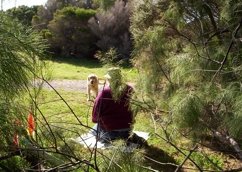
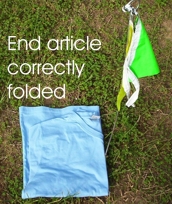
If at the end of the track you are going to leave an article it must be a tee shirt folded twice and laid flat on the ground at the bottom of the flag marker. If you are going to return to the end of the track for the dog to find you, make sure you follow the going out markers as set out by the judge. If waiting at the end of the track please be as still as possible and follow instructions.
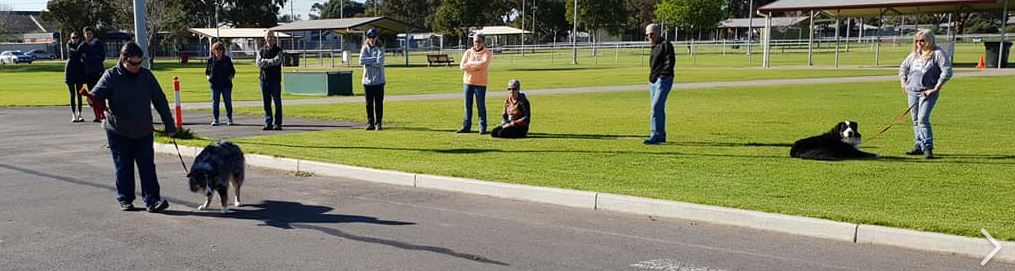
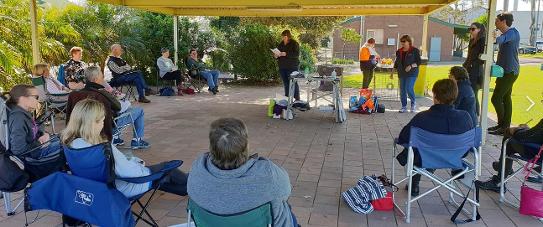
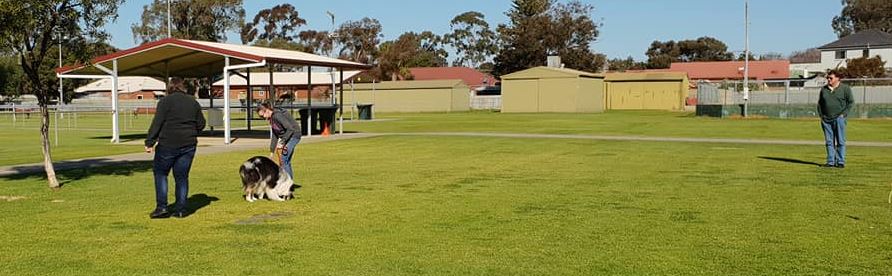
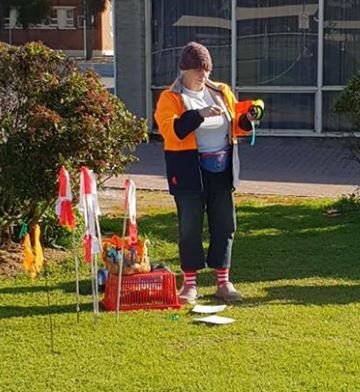
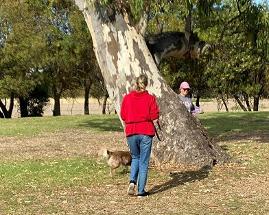
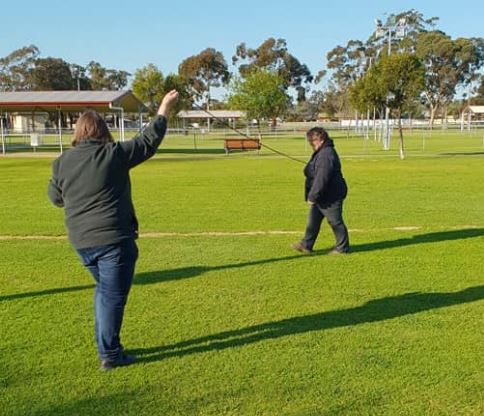
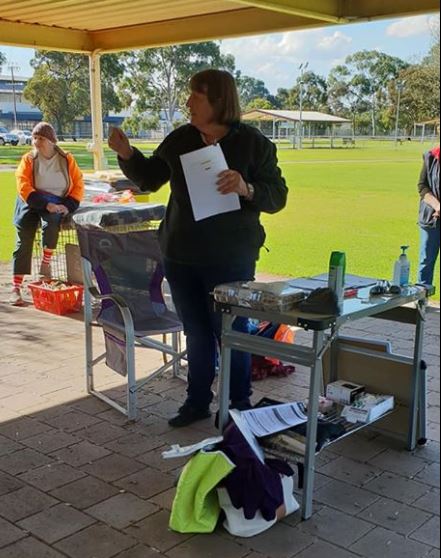
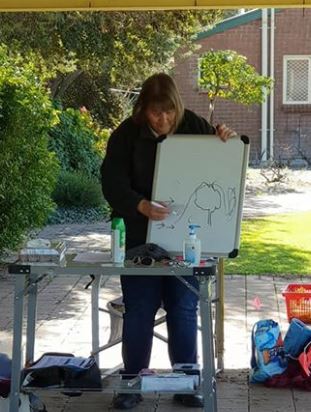
Some pics from the July 2020 Beginning Tracking Workshop....23 people attended. Topics covered included what is scent? How to lay a track, lead handling, hard surface tracking, choice of harness, flag making, rules discussion and questions and answers
We don’t undertake training in the warmer months as it is not safe to do so both for the dogs and the owners. We are always cautious of snake activity for Tracking and hot pavement and heat exhaustion for Track and Search.
Members are reminded that they are NOT to be in any of the trialling areas at Monarto (even the areas open to the public and definitely not on any of the lands that we have special permission to use) unless in the company and assisting one of the judges plotting for a trial in the 10 days prior to a trial or earlier if judges have commenced plotting, unless at official club training.
If you are not sure or have a good reason to be in these areas, please consult with Josie Miller or Trial Manager. We have very specific permissions to go cross country at trials and training days and would not want to lose the use of the area.
PREPARING FOR A RURAL TRACKING TRIAL - A few tips,
READ THE RULES !
It will help you understand how things work on the day.
You are giving yourself the best chance to do well when you know what to expect.
https://trackingdogclubofsouthaustralia.yolasite.com/rules.php
Ensure you have the right length of lead, and correct type of harness for your dog. (Read the rules) Ensure it fits okay
Give yourself plenty of time to get to the checking in point.......
Monarto is at least an hour from Adelaide CBD
....possibly more depending on where you live.
Give yourself extra time to get there. No one wants to arrive stressed.
Checklist of things to bring / consider
IMPORTANT Be sure to check in at the meeting place specified for vetting by the time specified. (No check in allowed past the designated time) as detailed on the Tracking Schedule. You can't compete otherwise.
Water and small bowl to give your dog a drink during tracking.
Treats ( for the end only ) in a sealed container.
Sturdy waterproof footwear / Beanie / Gloves / Mobile Phone
(turn it off /or mute when competing !
- you don't need that distraction on a track with your dog)
Waterproof clothing and waterproof pants
....yes it does rain there sometimes !
Consider dressing in layers - it can be cold first thing in the morning and get warmer as the day goes by.... take a layer off later.
Pack a change of clothes....maybe not needed but take them anyway
Articles that are needed for walking other tracks as instructed by your judge. Keep handy the phone numbers of - Trial Manager / your judge / your tracklayer.
Be prepared to assist at the trial, stewarding, walking tracks or cross tracks for other competitors and bringing tracking articles if requested by your judge. (No bright / fluoro colours)
Instructions of where to meet -
1. Vetting check in as per location and times listed on the schedule
2. Then follow instructions by your judge (Monarto Map file on website shows local roads and is useful)
Visit the toilets in either Callington township or Monarto Oval.
These are closest to our tracking areas.
Remember to enter the next trial immediately following the tracking day. This can be done via Easydogentries (online) at www.easydogs.com.au
or hand your entry to the trial manager with payment for the next trial you plan to enter when we meet for presentations.
If the handler of the dog is to be different on the day this also should be notified at time of entry and to your judge
If a “Track On” becomes available payment and an entry form will be required before the track is done.
If you gain a title at the Trial (i.e., TD or TDX or TCH) make sure you put in an application to Dogs SA for your dog’s title to be registered.. This must be done before you can complete at the next trial. There is a link on the Dogs SA website accessible via our club page so you can register a title.
Go to http://www.dogssa.com.au/?page_id=1403
A few snacks, maybe a thermos ......at presentation we often share nibbles. Most importantly, enjoy your day!
HANDLING THE LEAD
The lead is a method of communication between you and your dog. You will need to become observant to detect subtle changes in tension on the lead and also make sure you don’t communicate incorrect information back to your dog via the lead.
Keep a light, consistent tension on the lead at all times. Some dogs give only very subtle changes in the tension they apply to the lead when they are on or off the track. If you allow the lead between you and the dog to drag along the ground then you will be unable to detect this. The lead is also more easily caught in bushes or pick up sticks, possibly giving an unwanted correction to your dog when it does so. Applying a constant tension also prevents the lead from tangling around the dog’s legs or body.
Some dogs, particularly soft dogs or those new to tracking, are very sensitive to changes in lead tension applied by the handler or when the lead becomes caught in vegetation. If too much pressure or a jerk is applied, it may serve to act as a correction. Some dogs then shut down because when they perceive they are being told that they are wrong when they are on the track, they then have nowhere to go.
Decide what you are going to do with the lead. Some handlers choose to trail it behind them.
This may be a problem if the lead catches in vegetation or tangles around the handler’s feet.
Others choose to coil the lead in one hand so that it uncoils easily when the dog moves away from them.
If at any stage the distance between the handler and the dog is decreased,
then the excess lead is coiled back onto the hand to keep a constant tension on the lead.
Some handlers prefer to wrap the lead behind their back, especially with a dog that pulls hard.
Make sure that your lead is in the desired position before the dog starts the track.
Keeping two hands on the lead gives greater control and consistency in tension. If a kangaroo or hare suddenly appears and your dog wants to give chase, you will have more chance of maintaining your hold on the lead if you are using two hands.
On corners when the dog is casting around searching for the track, don't allow the lead to jerk. The easiest way to maintain a consistent, light tension upon the lead when the dog is casting around is for the handler to hold the lead above his or her head. If necessary, the dog can move behind the handler without the lead becoming tangled around the handler's legs.
It is also a good thing to teach a stop command. If you have a dog with a trained stop and you can see that the lead is going to tangle you can ask for a stop , this can avoid an inadvertent reprimand and give you time to untangle them